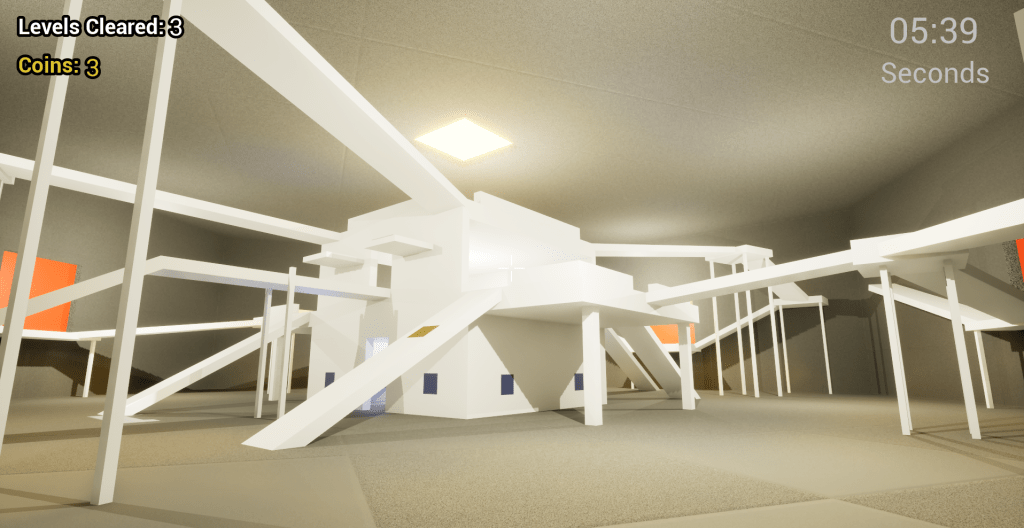
Stop Playing my Game is a game I worked on for my final project in Theory and Design of Games. I was on a team of four, where I was responsible for the Level Design, 3D modeling, and programming our Pause and Settings menu. The game is a Roguelike, where you the player are trapped in a game developer’s unfinished project, and the developer is forcing negative modifiers on you to get you to stop playing. Each room you progress through adds one new bad modifier, hampering everything from your movement to your camera, and even the environment.
Being that this game was unfinished on purpose, it posed a bit of a stylistic challenge to me as the level designer, seeing that I had to strike a balance between looking unfinished and still being visually appealing. The general idea I eventually landed on was “A very good Greybox”, since that is what it is, in essence. It was ultimately good practice for me, having to focus on the sense of physical space, with no fancy textures and few bright colors to lean on.
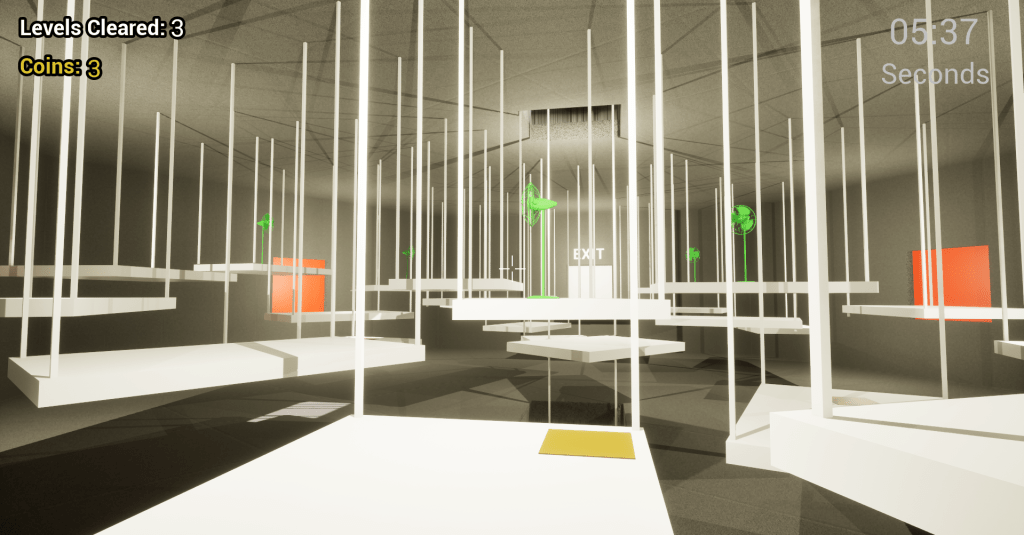
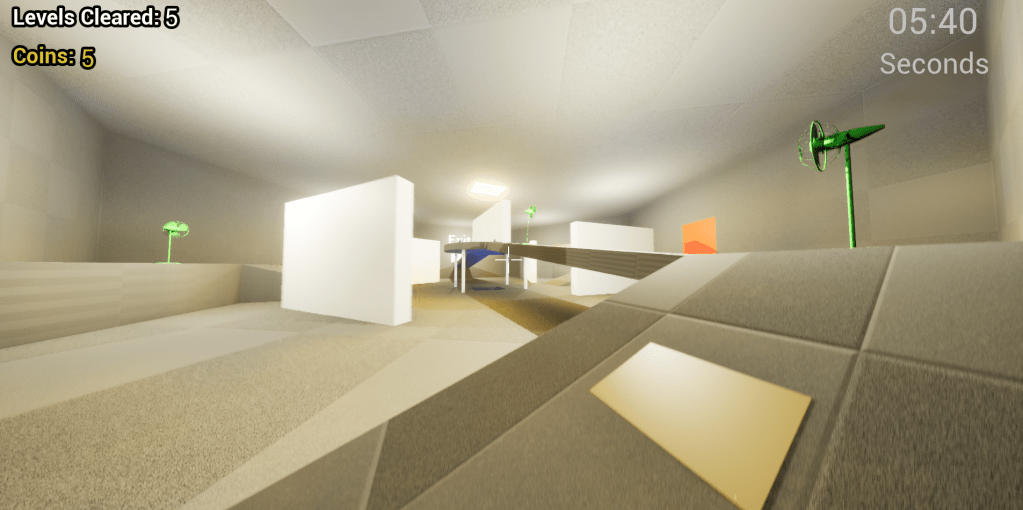
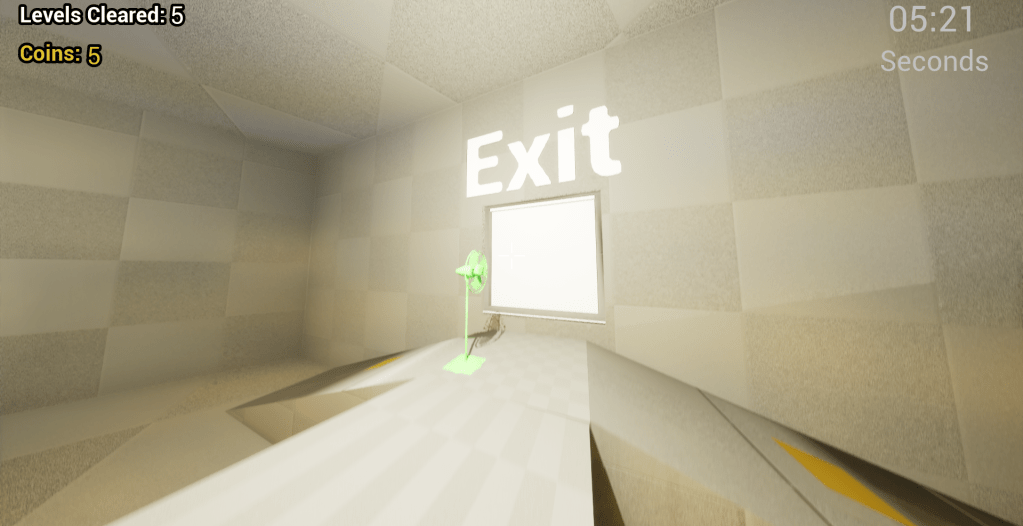
Additionally, I tried my best to make every level feel distinctive from one another, despite them all sharing the same color scheme and basic building blocks, which I tried to do via giving each room a gimmick of sorts. One room is a maze, one is parkour based, one has a locked exit with a key, etc. My goal was for a player who’s seen all the rooms be able to tell them apart almost immediately upon entry. I’m glad to say that I mostly succeeded, and it’s a pattern I hope to keep up in future development.
Now I said before that I was responsible for all the 3D modeling of this game, and while that’s true, it’s a bit misleading when you remember that there wasn’t much 3D modeling in this game. Though, I’m confident in saying this is a case of quality over quantity, given the models I did make worked very well for what the game needed. I’m very happy with how the fan turned out.
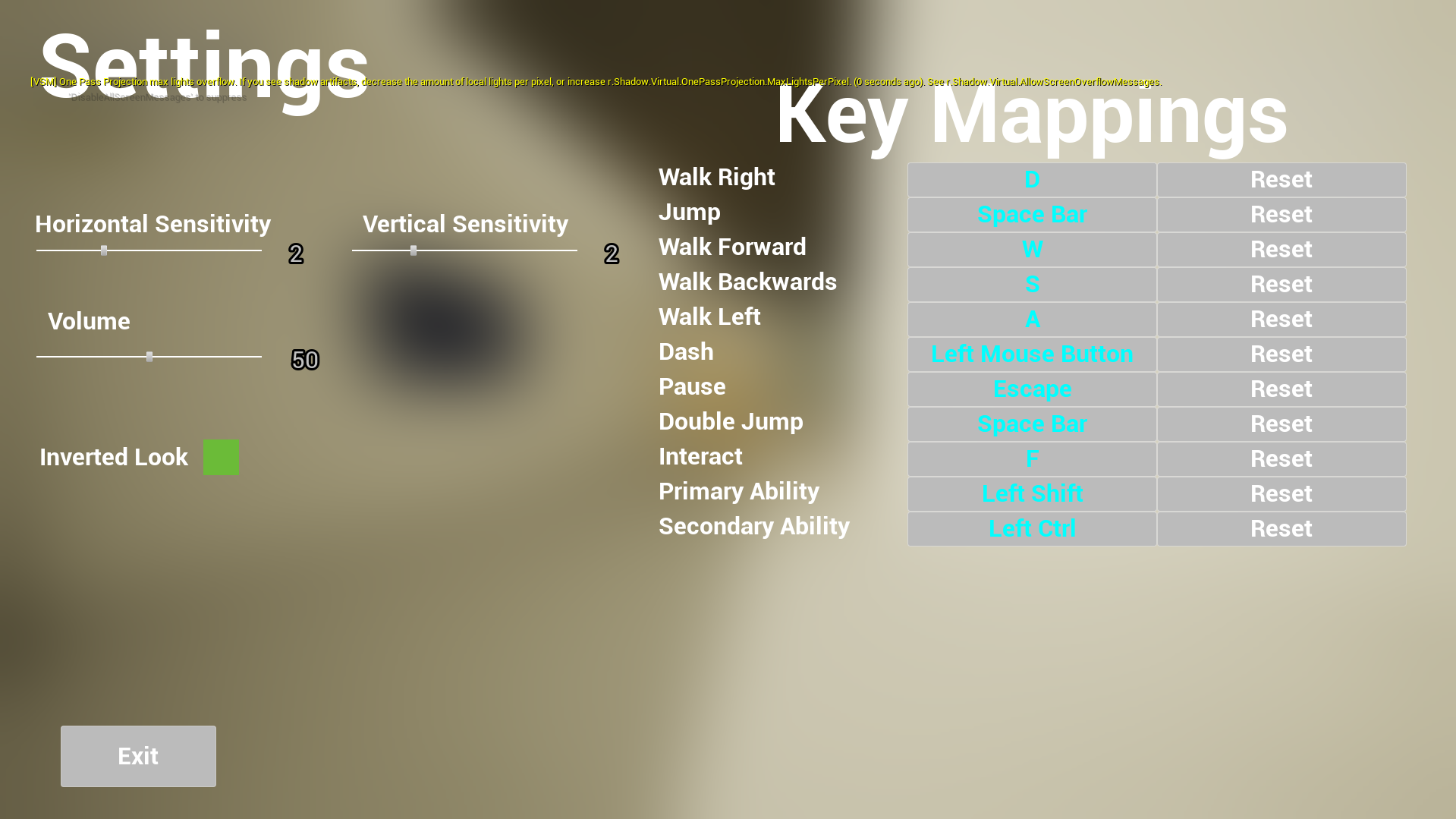
Because the project ended up leaning very heavily on the things happening behind the scenes, I was tasked with programming tasks here and there to help fill the gaps. I was happy to help, and it was a great chance to practice and learn programming in bite sized chunks. Recently, after making a simple feature that allowed the player to pause, I realized that one of the biggest notes of feedback was the sensitivity felt unnecessarily high when lots of modifiers were at play, and that led me to look into making a way to adjust it. The settings menu only grew from there, since I couldn’t just leave it barren with two things. I personally am happy that I was able to make something outside my area of expertise work so well.
 Max's Portfolio