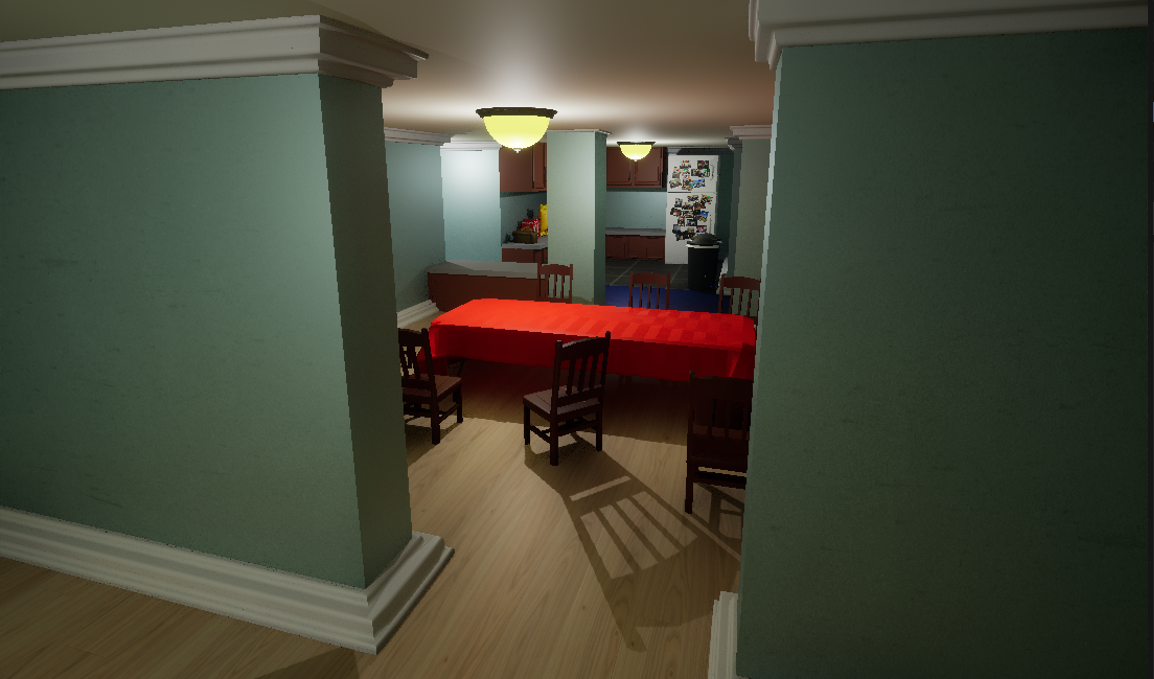
Breaker-47 was a solo project that I worked on during the spring of 2025. The game revolves around you, a “breaker”, whose job it is to break into places and destroy anything of value. The idea was born out of seeing a friend playing with Unreal Engine’s fracture system, and resolving to make a game entirely revolving around it. Because the purpose of the project was also to improve my skills, I made the personal stipulation to model every asset that I would use in the project.
The game is broken down into levels of varying size, starting out with a relatively simple Convenience Store, and scaling from there. Your arsenal includes 4 different weapons that all vary in effectiveness, including a baseball bat, a sword, a morning star, and a katana. Your gameplay loop really just involves hitting things until they break, or are at very least scattered on the floor.
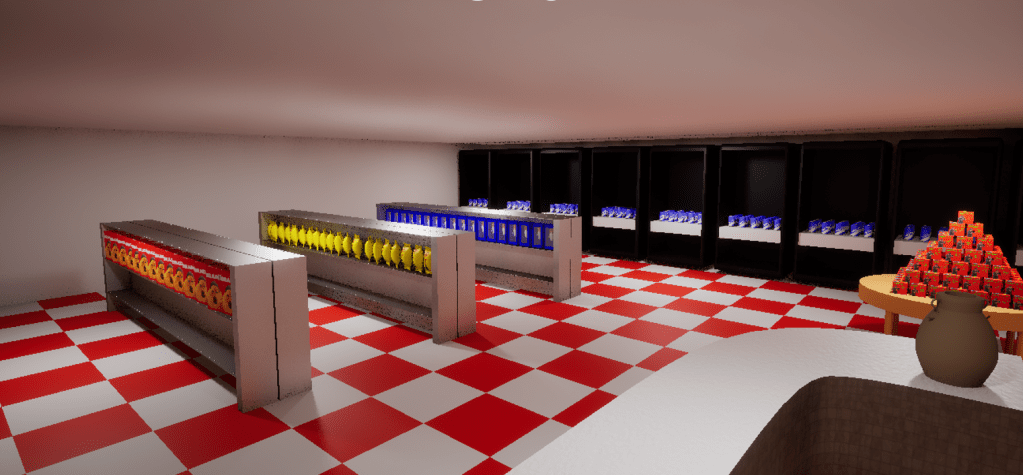
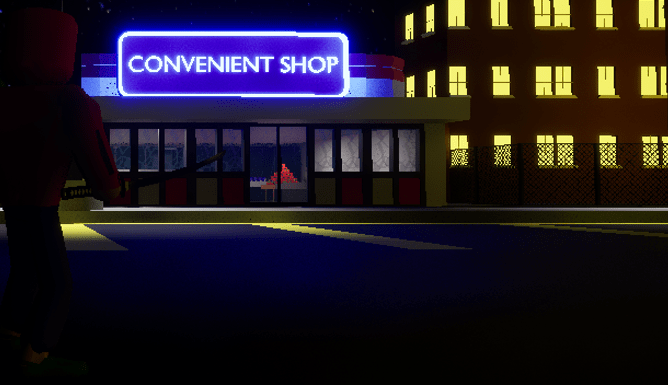
This project is admittedly not finished, and knowing what I know now, I’d likely go about this project in a different way, but I have no qualms saying this is easily the most important project I’ve worked on (so far). I really can’t stress how much knowledge and technical ability I was able to pick up from working on the project, especially in Unreal Engine, which I only had a working knowledge of before the project started.
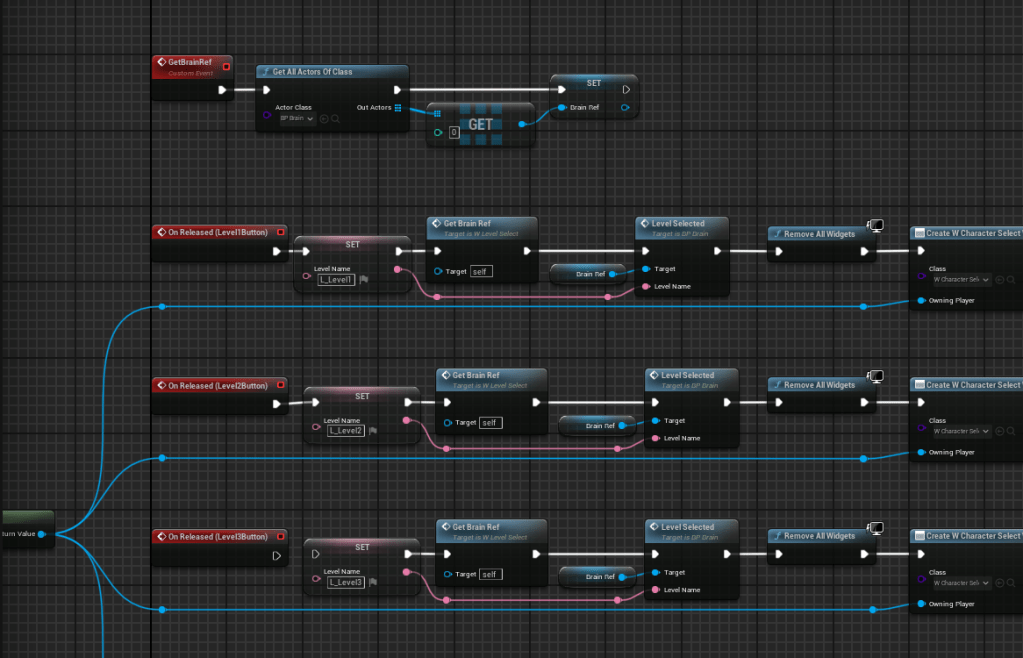
Take for example, the use of Unreal Engine’s node-based coding system. I don’t consider myself a programmer, but I can say with confidence that because of this project I know how to program in this language. The biggest hurtles to overcome were the Level and character selection, given that I had several different levels that I had to pass information between. Being able to figure this out through trial and error as well as the help of tutorials was a huge step forward for me.
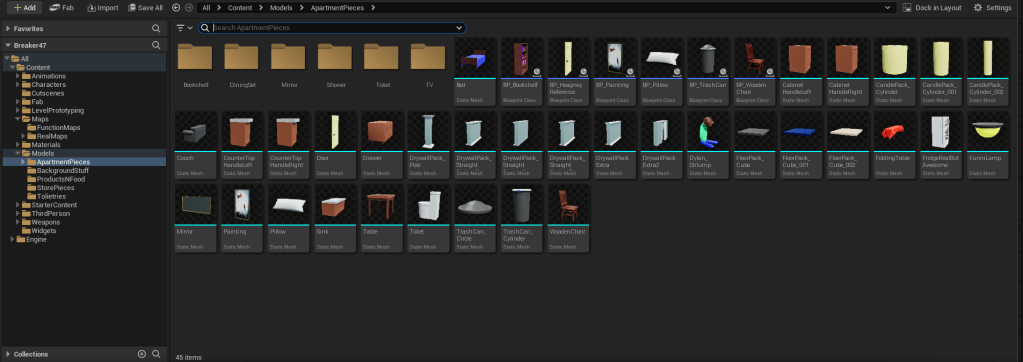
This project also gave me a perfect opportunity to work on my 3D modeling and Level Design, both of which I elaborate more on (in terms of my process) in these pages, but suffice to say, for this project I worked on making two very detailed levels and a metric ton of smaller, simplistic models to fill them out.
 Max's Portfolio